
 685 738 325
Preventive Medicine
Your puppy or kitten's first vet visit: what to expect
23 June 2026 · Updated on 24 August 2026

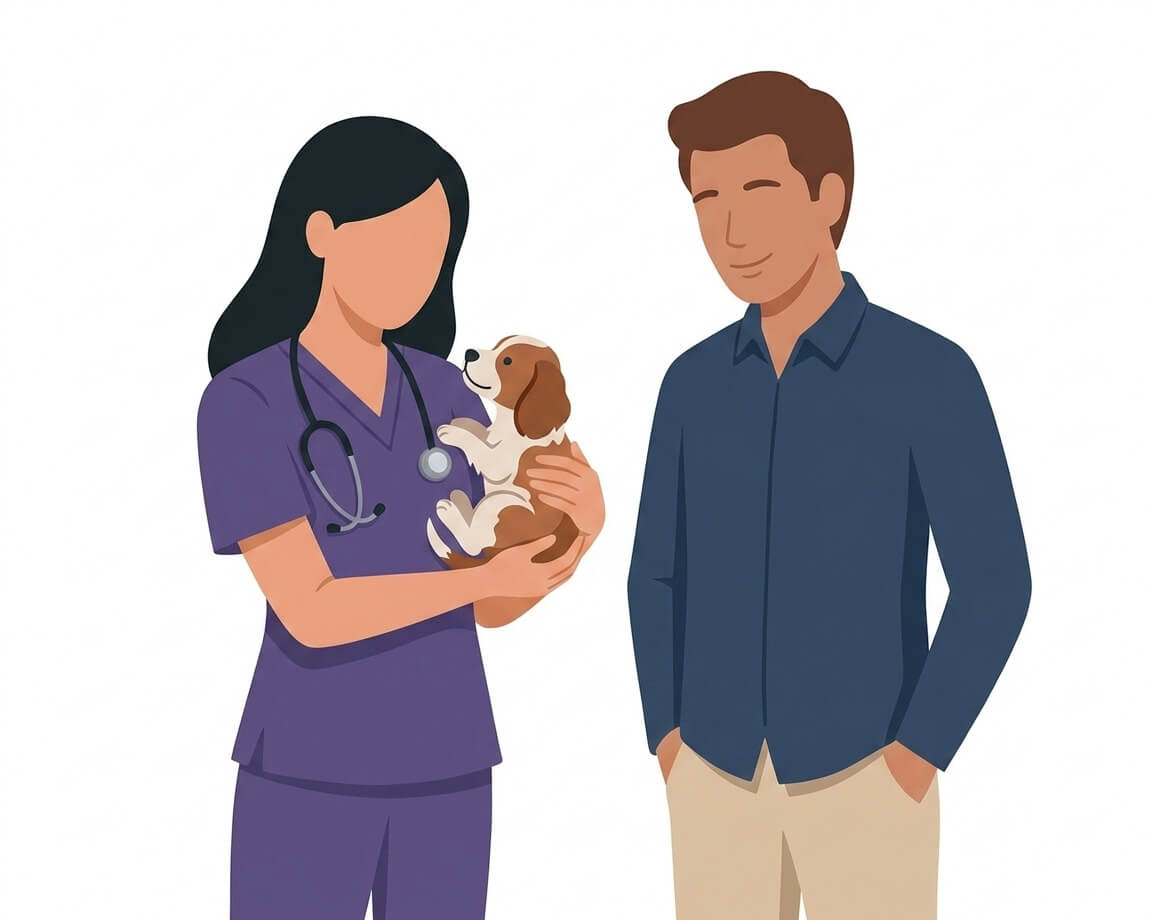
The first vet visit for a puppy or kitten is one of those moments where excitement and nerves mix in equal measure. Everything is new: their routines, their needs, their personality just beginning to show. And although it might seem like just another item on the to-do list, this first consultation is much more than that.
There’s a widespread idea that the first vet visit is just for “getting the vaccines done”. It isn’t. It’s the moment when the vet meets your animal for the first time, begins building their medical record, and designs the preventive protocol that will accompany them for the rest of their life. In many ways, it’s the most important consultation of all.
It’s also the moment when you can ask every question you’ve been noting down since they arrived home. The ones you’ve been saving for “when I go to the vet”. Well — that moment has come.
When should you go for the first time?
🐶 Puppies
The general recommendation is to come to the clinic within the first week or two of the puppy arriving home. It’s not urgent unless you notice clear signs of illness: vomiting, persistent diarrhoea, extreme lethargy or loss of appetite. In those cases, don’t wait.
If you already have other animals at home, it’s worth bringing the appointment forward: a quick check to rule out parasites or contagious illness protects both the new puppy and your existing pets.
🐱 Kittens
With cats, the recommendation is slightly different. The change of home already represents significant stress for a young kitten, and adding a trip to the clinic immediately on top of that can be too much for their nervous system. If they are active, eating normally and showing no warning signs, you can wait a few days for them to settle into the new environment before the first visit.
If there are obvious symptoms — eye discharge, frequent sneezing, diarrhoea or marked lethargy — come in sooner without waiting.
What happens at the first appointment
The first visit doesn’t follow a five-minute script. It’s a complete consultation, and usually the longest one that will follow — precisely because there is a lot to cover.
The vet starts with a full physical examination: eyes, ears, mouth, skin and coat, heart and lungs, abdomen, joints and weight. This is not a superficial check — it’s a systematic assessment that establishes a baseline. Every finding is recorded and serves as a reference point for everything that comes afterwards.
If the puppy or kitten comes from a breeder or rescue and has prior documentation, that is reviewed too: what treatments they have already received, whether any vaccines have been given, whether deworming has been done. From there, the vet assesses nutritional status and development and decides on next steps.
If it hasn’t been done already, the first deworming will be carried out that same day. A personalised vaccination schedule is also drawn up — which will depend on the animal’s age, background and lifestyle — and microchipping will be considered if not already done (mandatory for dogs in Spain, strongly recommended for cats).
All of this comes with guidance on nutrition, socialisation and the basic care you’ll be incorporating into your daily routine. It’s the moment to ask whatever you need: no question is too small or out of place at this appointment.
The differences between bringing a puppy and a kitten
Dogs and cats are not the same, and good veterinary clinics know they shouldn’t be handled the same way either. Although the first visit follows a similar structure in both cases, there are important differences worth knowing in advance.
Kittens are generally more vulnerable to stress at the clinic than puppies. While a puppy may be boisterous and curious during the consultation, a frightened kitten freezes or tries to hide, and that extreme stress response can interfere with the examination. At Rovira Veterinary Clinic we work with low-stress feline handling protocols led by Dr. Lídia Adell, who holds a postgraduate diploma in feline medicine, precisely so that the experience is as non-aversive as possible from day one.
In practical terms: if you’re bringing a kitten, the carrier matters. Ideally it should be rigid with a removable top lid — so the vet can examine the animal without lifting them out if they’re very stressed — and covered with a blanket from home to retain familiar scents. In the waiting room, keep it elevated or on your lap, never on the floor, and away from dogs.
With a puppy that hasn’t completed their vaccination course, the precaution is different: they shouldn’t touch the floor or have direct contact with unknown dogs in the waiting room. Carry them until you’re inside the consultation room. The questions that come up will also differ: with dogs, the focus tends to be on socialisation, walks and basic learning; with cats, on environmental enrichment, litter tray set-up and whether the animal will live indoors or have outdoor access.
What to bring to the first visit
| What to bring | Why |
|---|---|
| Vaccination booklet or documentation from breeder/rescue | To know what treatments have already been given and avoid repeating or missing doses |
| Stool sample (if possible) | To detect intestinal parasites from day one |
| Carrier for the kitten | Essential for a safe and less stressful journey. Ideally rigid with a removable top lid: allows the vet to examine the cat without taking them out if they’re very stressed, significantly reducing anxiety during the appointment |
| List of questions | The first visit is the ideal moment to get them all answered; the vet expects them |
Why the first visit lays the foundation for everything that follows
There’s something new owners don’t always anticipate: the relationship an animal builds with the veterinary clinic from puppyhood or kittenhood determines, to a large extent, how they will react at every future visit. An animal that from the start associates the clinic with manageable, non-traumatic experiences is much easier to examine and treat as an adult. It’s not a minor detail — it’s a long-term investment.
The medical record that begins at this first visit accompanies the animal throughout their entire life. Starting weight, development, first treatments, vaccines, lab results if any: every data point is a reference that, over time, can make a real difference in a diagnosis.
At Rovira, low-stress handling is not a practice reserved for cats. We apply that same philosophy with puppies, who are in a critical period in which their associations with the environment — positive or negative — form and consolidate at a speed that will not be repeated at any other stage of their life. Preventive medicine starts here: not when the first symptom appears, but from the very first day.
If you want to know how often to keep coming after this first visit, we explain it in detail in our guide on how often your pet should visit the vet by age.
Frequently asked questions
— Do I need to book an appointment or can I just walk in?
Always with an appointment. At Rovira we reserve this especially for the first visit, because this consultation requires more time than a routine check-up: there is a lot to examine, a lot to record, and many questions to answer. Booking ahead guarantees you have the time you need without any rush.
— Can I bring my puppy even if they haven’t completed their vaccinations?
Yes, there is no need to wait until the vaccination course is complete. You will need to take precautions in the waiting room — keep them in your arms, away from other dogs and off the floor — but the clinic is set up to receive you safely. Waiting is not the right option.
— What if my kitten is very frightened when they arrive?
It’s completely normal, and we expect it. Our team is trained to work with stressed animals using low-stress feline handling techniques. If the kitten is very distressed during the first visit, the most sensible decision is sometimes to complete the examination in a short follow-up visit a few days later, rather than forcing a full procedure on an animal that cannot calm down. For the animal, that is always better than rushing them.
Your pet’s first vet visit isn’t a formality or a box to tick. It’s the beginning of a care relationship that, if built well from the start, makes everything that comes afterwards easier — for the animal, for you, and for the team looking after them. At Rovira Veterinary Clinic, in the heart of Gràcia, Barcelona, we accompany that first step with the time and attention it deserves. Browse our preventive medicine services or get in touch with us to book your first visit.
Sources
Do you have any questions about your pet?
Book an appointment